Overview
TJ Woodcraft is a small custom woodworking business specializing in handcrafted outdoor and household products.
For its first two seasons, the business relied primarily on Facebook Marketplace and referrals to attract customers. While this strategy provided visibility, it also created challenges around communication, trust, and customer expectations, resulting in repetitive inquiries and fragmented communication.
This project explores how a small business website can support customer decision-making, establish credibility, and improve communication without introducing unnecessary complexity for either the customer or the business owner.
Problem
TJ Woodcraft relied primarily on Facebook Marketplace and word-of-mouth to generate business. While Marketplace created visibility, many customer inquiries led to repetitive conversations, unclear expectations, and low conversion to paid work.
Customers frequently struggled to:
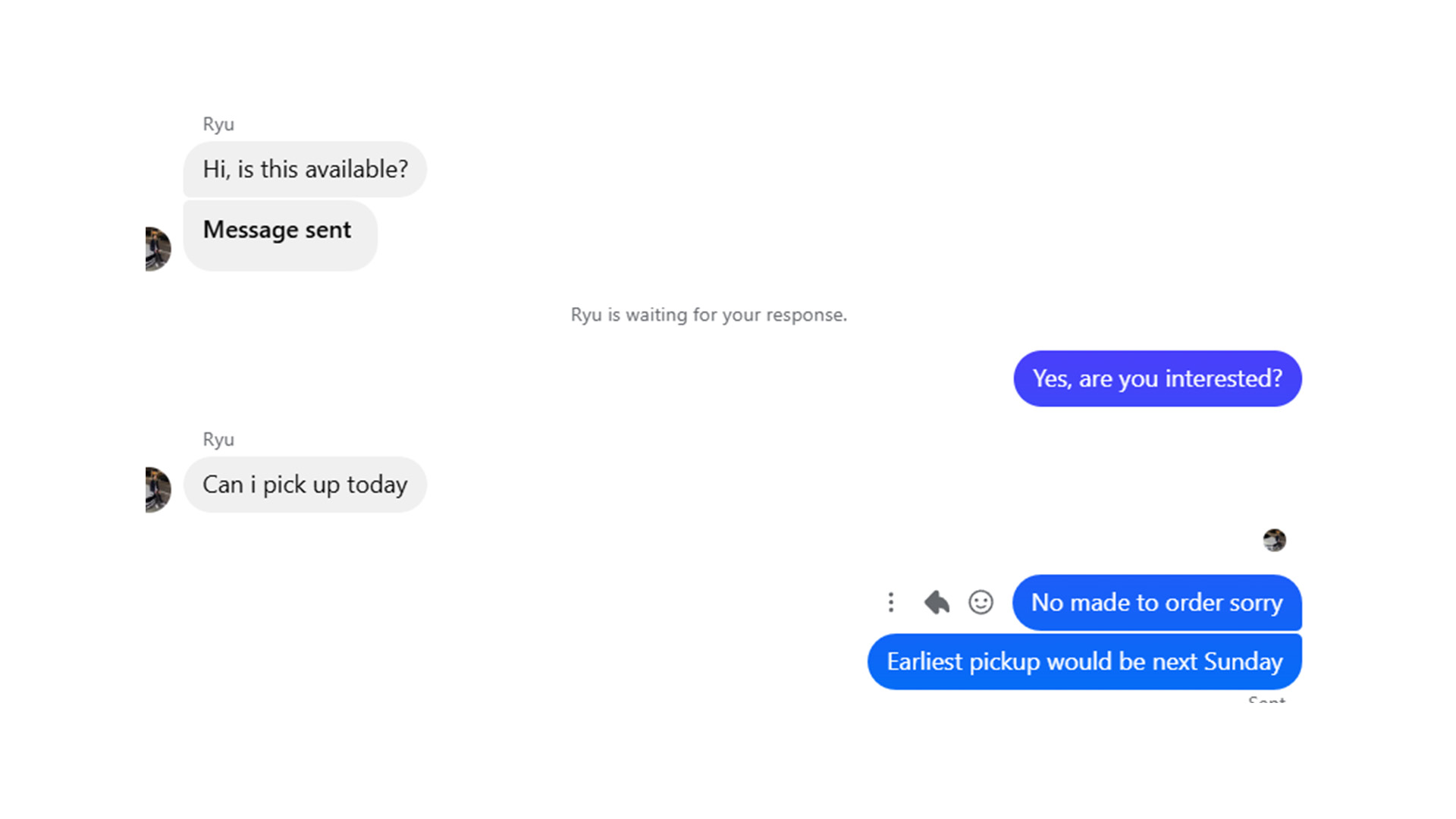
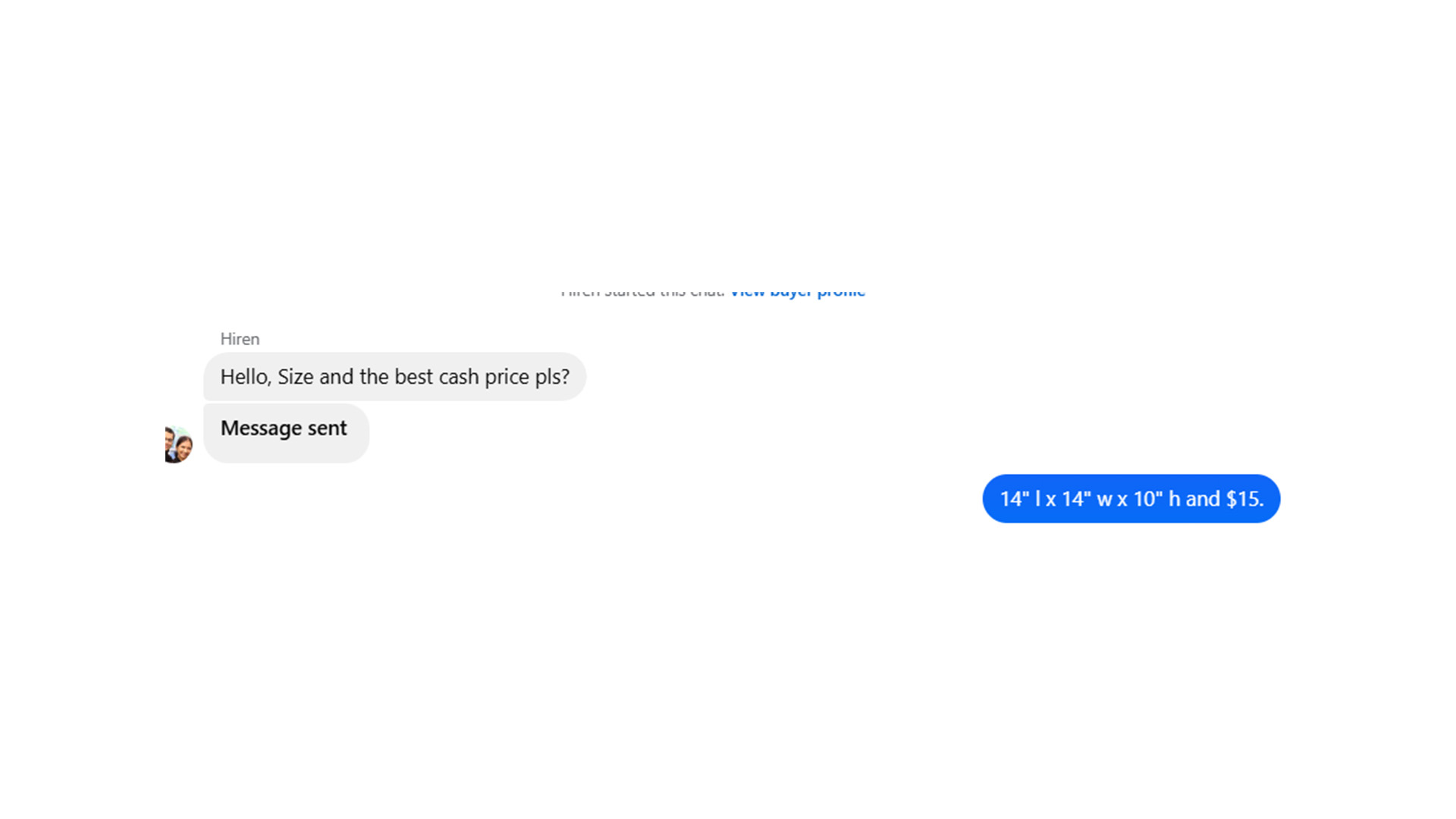
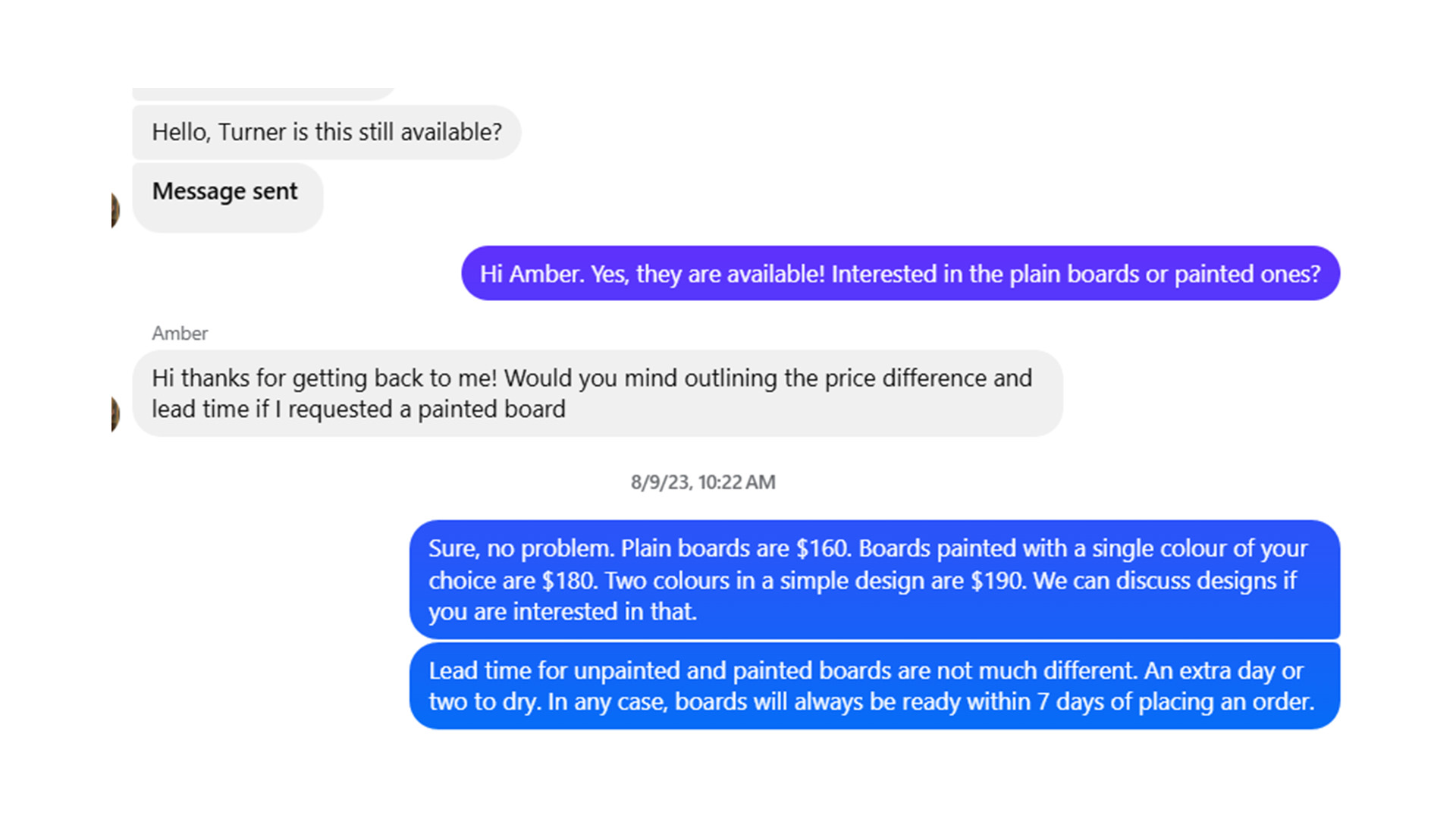
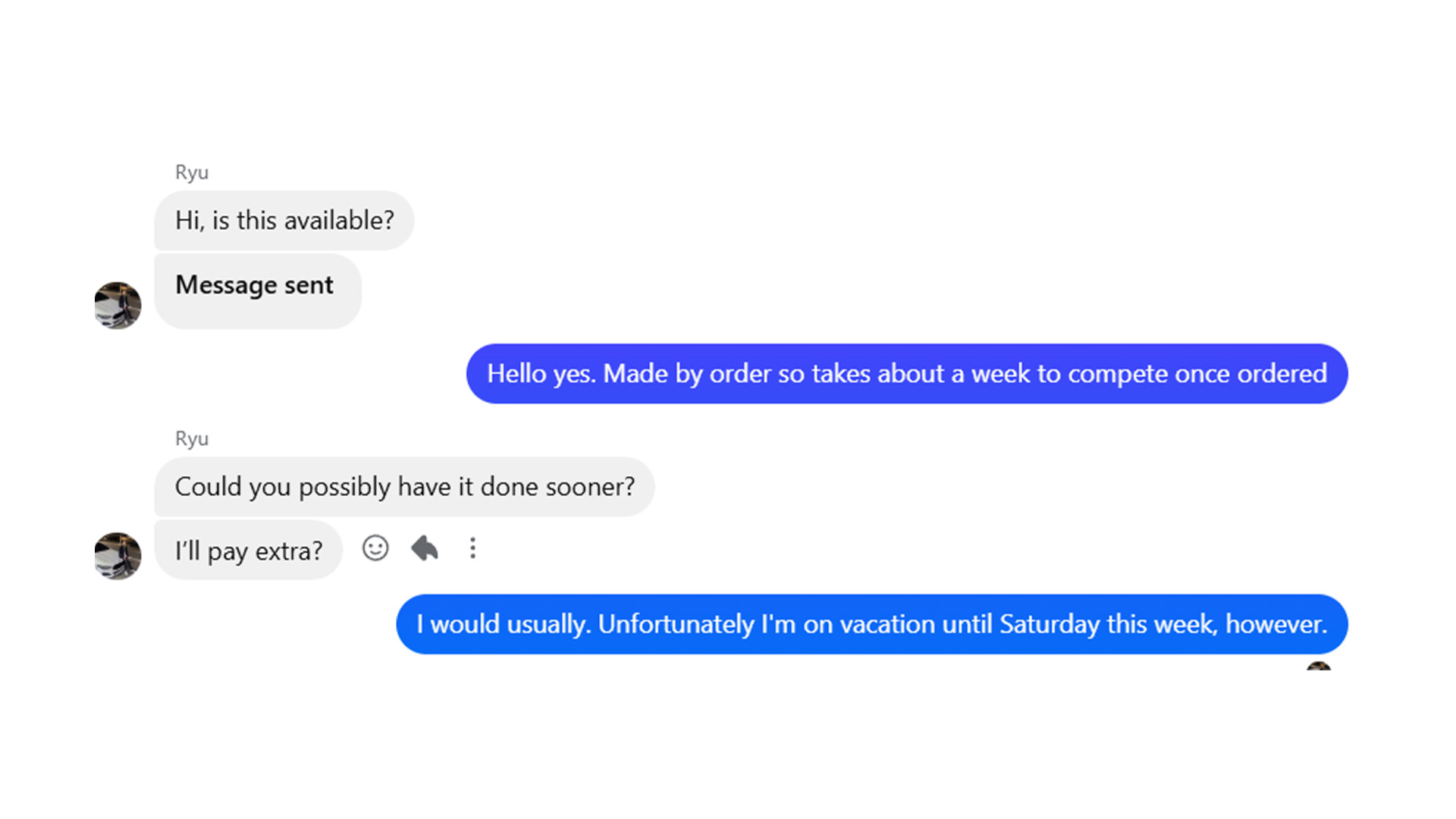
Recurring questions across Facebook conversations highlight the same usability issues.
At the same time, implementing a full e-commerce platform would have introduced unnecessary complexity for both the business and its customers at its current scale.
The core design challenge became:
How might we help customers confidently inquire about custom woodworking projects without introducing e-commerce?
Design Constraints
Insights
Research was conducted through conversations with the business owner and reviewing recurring Marketplace inquiries.
Several patterns consistently emerged:
The key insight was that customers were not interested in immediately purchasing products, rather, they were trying to determine whether TJ Woodcraft could create something that matched their vision, budget, and timeline.
Interestingly, much of the information customers required to make an informed choice already existed, but it was being communicated within an environment that lacked structure. Reframing the same information within a guided web experience significantly changed how customers perceived the business.
Customers were not interested in immediately purchasing products, rather, they were trying to determine whether TJ Woodcraft could create something that matched their vision, budget, and timeline.
Design Principles
Solution
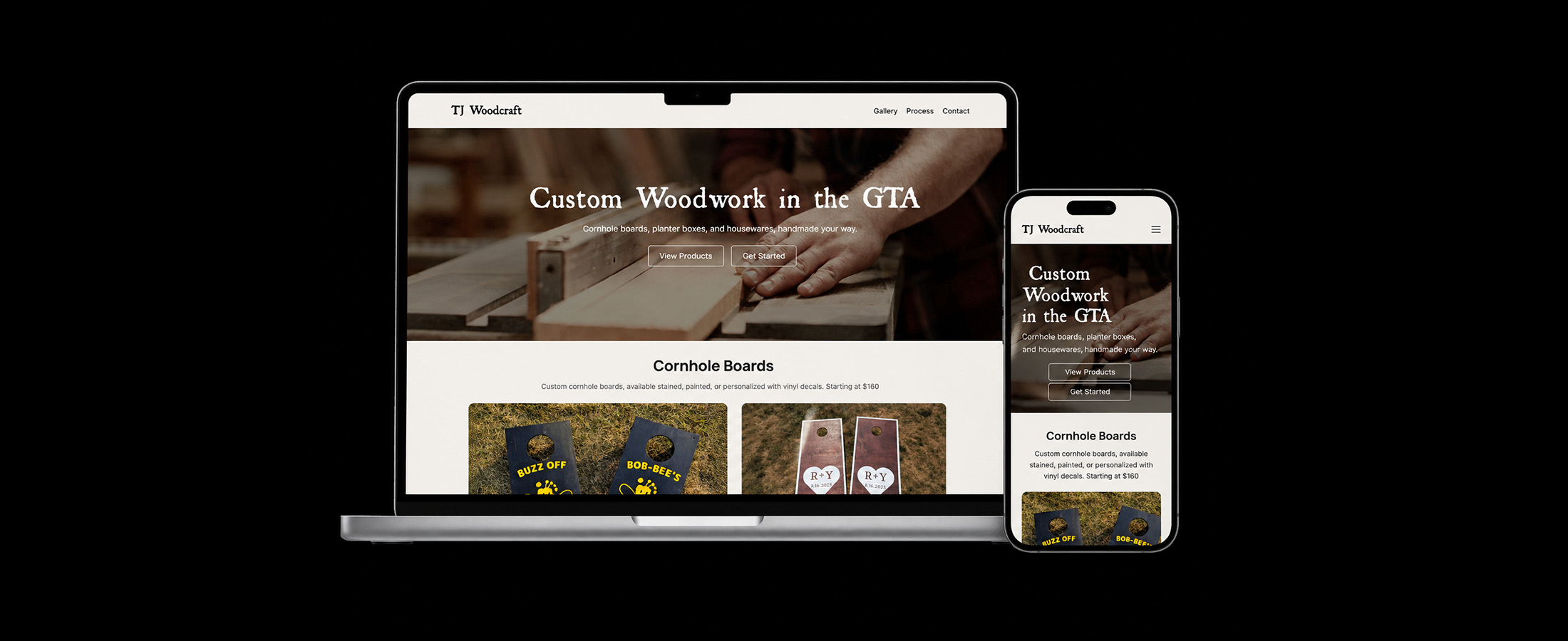
The final solution was a lightweight multi-page website designed to guide users from initial interest toward informed inquiry.
The site included:
Homepage
Rather than functioning as a traditional e-commerce platform, the site was designed as a guided inquiry experience. Users are gradually introduced to products, process details, and common questions before being directed toward contacting the business.
This structure reduced repetitive communication while helping customers develop confidence before reaching out.
Rather than functioning as a traditional e-commerce platform, the site was designed as a guided inquiry experience.
Key Decisions
Outcome
This project reinforced that UX is not only about providing information, but also about structuring when and how users encounter it. The website helped:
Much of the website contains the same core information previously available through Marketplace listings. However, reframing that information within a guided and intentional experience significantly changed how customers perceived clarity, credibility, and professionalism.
The project also reinforced the importance of balancing friction carefully. Too little structure creates confusion and uncertainty, while too much complexity can cause users to abandon the process entirely. Designing the correct level of guidance is integral to the success of any project.